


A wireless xlr transmitter and receiver is a two-part radio system that replaces a single XLR cable between a microphone and a mixer, recorder, or PA system. The transmitter attaches to the microphone’s XLR output, while the receiver connects to the destination device. This setup is useful when running long XLR cables is impractical, when a performer needs to move freely, or when a boom operator wants to avoid cable noise. Unlike general Bluetooth audio receivers, a wireless xlr transmitter and receiver preserves the balanced audio path that XLR connectors provide.
What Is a Wireless XLR Transmitter and Receiver?
A wireless xlr transmitter and receiver system consists of two devices that communicate over a radio frequency band. The transmitter is a small bodypack or plug-on unit that draws power from an internal battery or the microphone itself. It samples the analog audio from the XLR connection, modulates it, and transmits it to the receiver. The receiver decodes the signal and outputs it through an XLR, USB-C, or 3.5mm jack. The entire chain remains compatible with standard XLR microphones, so no special microphone is required.
Some systems use UHF frequencies between 470 MHz and 698 MHz; others use the 2.4 GHz ISM band. The choice affects range, interference resistance, and licensing. Bluetooth.com notes that 2.4 GHz devices are easier to pair but more susceptible to Wi-Fi congestion, while UHF penetrates obstacles better. The Federal Communications Commission (FCC) regulates wireless microphone frequencies in the United States. For a general overview of wireless audio standards, see Bluetooth on Wikipedia.
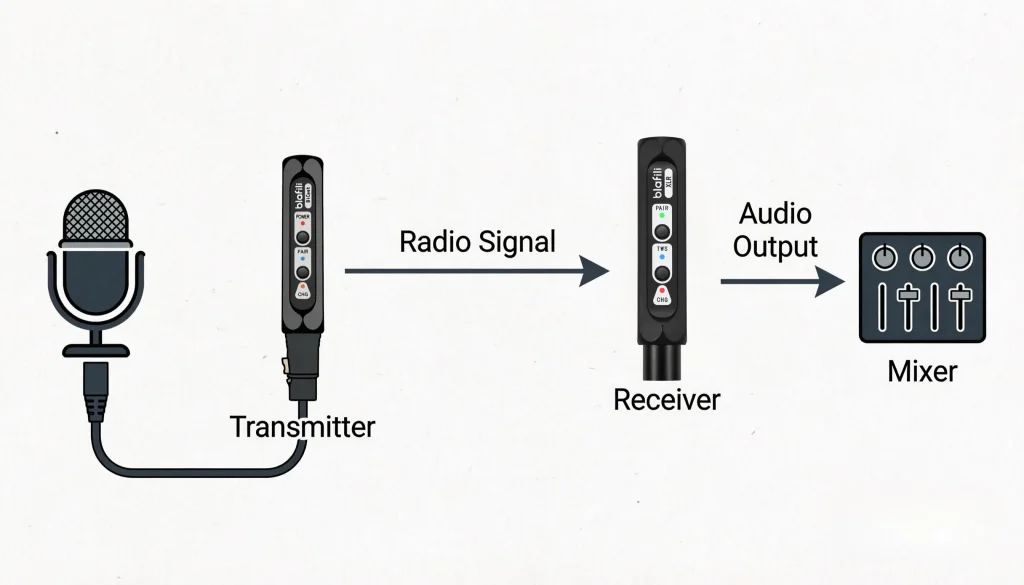
How a Wireless XLR Transmitter and Receiver Works
The basic operation of a wireless xlr transmitter and receiver follows a simple path: microphone to transmitter, transmitter to receiver via radio, receiver to mixer. The transmitter connects directly to the microphone’s XLR output. In plug-on systems, it slides onto the microphone body and may include a locking mechanism. The receiver sits near the mixer and outputs a standard XLR signal.
Latency and audio quality determine performance. Latency is the delay between sound entering the microphone and leaving the receiver. Keep it below 10 milliseconds for live sound and film synchronization. Audio quality depends on sample rate and bit depth. Professional UHF systems often support 24-bit audio at 48 kHz, while consumer 2.4 GHz systems may use compression.
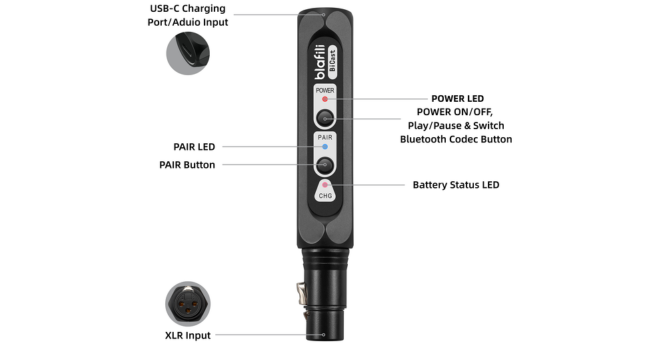
Power delivery matters too. Dynamic microphones need no external power, but condenser microphones require 48V phantom power. Not all wireless xlr transmitters supply phantom power. If you use a condenser microphone, verify switchable 48V before purchase. The bicast-xlr-bluetooth-audio-transmitter illustrates a design that supports both dynamic and condenser sources through a USB-C powered transmitter with Bluetooth 5.2 output.
Frequency Bands: UHF vs 2.4 GHz
The choice between UHF and 2.4 GHz changes how a wireless xlr transmitter and receiver behaves in different environments. UHF systems occupy frequencies that travel through walls and people with less attenuation and offer more channels for multi-system stages. The downside is larger hardware and possible licensing requirements. 2.4 GHz systems are smaller and simpler but share the band with Wi-Fi and Bluetooth, so interference is a risk in crowded RF environments. Range is typically shorter than UHF when obstacles block line of sight. For small venues, conference rooms, or home studios, 2.4 GHz is often sufficient.
Battery Life and Operating Range
Battery life on a wireless xlr transmitter and receiver is measured in hours of continuous operation. Most plug-on transmitters use rechargeable lithium-ion batteries rated for 5 to 10 hours. Some professional systems accept replaceable AA batteries for mid-event swaps. The receiver may be AC-powered or bus-powered through USB-C.
Operating range assumes a clear line of sight. Walls, metal surfaces, and human bodies reduce usable distance. A system advertised with a 330-foot range might deliver only 100 feet in a crowded ballroom. For stage use, assume 60 to 80 percent of the maximum range in real conditions.
The bicast-xlr-bluetooth-audio-transmitter and similar compact systems are designed for portable use, where easy charging and predictable battery behavior matter more than maximum range.
Phantom Power and Microphone Compatibility
A dynamic microphone generates its own signal from a moving coil and needs no external voltage. A condenser microphone relies on a small internal capsule that requires 48V phantom power to operate. If your wireless xlr transmitter and receiver setup includes a condenser microphone, the transmitter needs to supply phantom power. Some systems offer switchable phantom power (0V, 5V, or 48V) to accommodate both microphone types.
Using a wireless xlr transmitter and receiver with a condenser microphone without phantom power results in a weak or silent signal. Sending phantom power into a dynamic microphone not designed for it can cause damage. Check the microphone specifications and the transmitter’s power delivery mode before connecting.
For users who need both dynamic and condenser flexibility, the ability to toggle phantom power on the transmitter becomes a primary selection criterion.
Common Use Cases
A wireless xlr transmitter and receiver is most useful when cable runs are physically impossible or hazardous. Live performances use these systems to give singers and speakers freedom of movement. Film and broadcast crews use them on boom poles to eliminate cable noise and tripping hazards. Presenters and lecturers use short-range wireless xlr systems to move around a stage without being anchored to a podium.
In each case, match the system to the environment. A small conference room may only need a 2.4 GHz wireless xlr transmitter and receiver with 30 feet of range. An outdoor festival may require UHF with 300 feet of range and channel scanning to avoid interference from other stages. The blafili-xlr-bluetooth-audio-receiver provides one example of a compact receiver that can sit on a mixing console or camera rig while accepting a wireless transmitter signal.

FAQ
Q: Can any XLR microphone work with a wireless xlr transmitter and receiver?
Yes. Both dynamic and condenser XLR microphones are compatible, but condenser microphones require that the transmitter supplies 48V phantom power. Check the transmitter’s specifications to confirm phantom power support before connecting a condenser mic.
Q: What is the typical latency of a wireless xlr transmitter and receiver?
Professional UHF systems usually deliver latency below 5 milliseconds. Consumer 2.4 GHz systems may range from 10 to 20 milliseconds depending on the codec and environment. For film and live monitoring, aim for 10 milliseconds or lower.
Q: Is a wireless xlr transmitter and receiver the same as a Bluetooth receiver?
No. A standard Bluetooth audio receiver is designed for consumer music streaming and typically outputs analog or digital audio for speakers. A wireless xlr transmitter and receiver is built to pass a professional balanced microphone signal through a radio link while maintaining XLR connectivity.
Q: How far can a wireless xlr transmitter and receiver work?
Line-of-sight range varies by band. UHF systems can reach 300 to 500 feet in open space. 2.4 GHz systems usually top out at 100 to 150 feet. Walls, people, and Wi-Fi networks reduce these distances in practice.


