


The right RCA Bluetooth adapter for 2026 comes down to four decisions: receiver or transmitter direction, Bluetooth codec, DAC and output quality, and power format. A home stereo or powered speaker wants a Bluetooth receiver with RCA outputs and an aptX-class codec. A car amplifier wants a 12V unit that switches on with the ignition, so the battery is not drained while the car sits overnight.
This guide covers both directions of the problem: adding Bluetooth to gear that only has RCA inputs, and sending audio from an RCA source out to wireless headphones or speakers. It then walks through the specs that separate a clean adapter from a noisy one, and the installation mistakes behind most complaints about hum and battery drain.
What Is an RCA Bluetooth Adapter? (Receiver vs Transmitter)
The RCA connector is the color-coded analog plug, red for the right channel and white or black for the left, that has carried line-level audio between hi-fi components for decades and remains standard on home receivers, amplifiers, and many car audio systems. Whatever an adapter does downstream, its job is to preserve that analog signal as audio moves between the wireless and wired worlds.
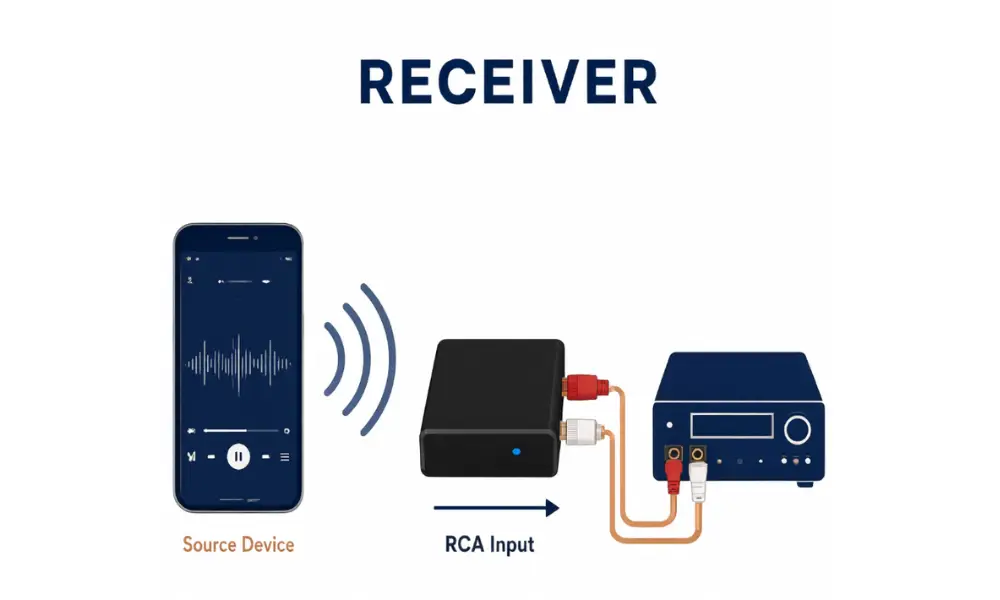
An RCA Bluetooth adapter is a small bridge built around that interface. It converts a wireless Bluetooth signal into analog audio your RCA input can accept, or the reverse. Direction matters, and mixing it up is the most common purchase mistake:
- A Bluetooth receiver plugs into an RCA input (AUX, CD, or Tape) on your stereo or amplifier and receives audio from your phone. Use this to add Bluetooth to gear that has none.
- A Bluetooth transmitter plugs into an RCA output on a source such as a turntable with a built-in preamp, a mixer, or a TV, and sends audio out to Bluetooth headphones or speakers.
Both directions are sold under the umbrella term RCA Bluetooth adapter. Check the signal path before ordering: audio flows into a receiver and out of a transmitter. The Bluetooth SIG maintains the Bluetooth standards, including the SBC codec every adapter ships with. Our Bluetooth Transmitter vs Receiver explainer covers the two roles in more depth.
How to Add Bluetooth to a Stereo or Receiver via RCA
Adding Bluetooth to an old stereo with an RCA Bluetooth adapter takes about ten minutes and no special tools:
- Pick an unused line-level input on the receiver. AUX, CD, Tape, or Video all work. Avoid the phono input. It applies a turntable-only EQ curve and expects a very small signal, so a line-level source distorts badly there.
- Connect the adapter’s RCA output to that input, red to red and white to white.
- Power the adapter with its wall adapter, USB cable, or 12V lead, depending on the model.
- Put the adapter in pairing mode and select it in your phone’s Bluetooth menu.
- Choose the matching input on the receiver and press play.
If the sound arrives distorted, lower your phone’s volume first, then raise the receiver’s volume. The same five steps apply to powered speakers with RCA inputs. If your gear has a 3.5mm aux jack instead of RCA jacks, a passive 3.5mm-to-RCA cable adapts most receivers with no sound penalty. For a deeper walkthrough of input choices and pairing quirks, see our guide on how to add Bluetooth to an old stereo.
Key Specs to Compare: Codec, Latency, DAC, and Power
Listings rarely make the differences obvious, so compare five things before you buy:
| Spec | What to look for | Why it matters |
|---|---|---|
| Bluetooth version | 5.0 or newer | Newer chipsets tend to support modern codecs and reconnect more reliably |
| Codec support | SBC baseline; aptX, aptX Low Latency, aptX Adaptive, or LDAC as upgrades | The codec decides how much detail survives compression and how much delay is added |
| DAC quality | Published DAC chip or signal-to-noise figure | The DAC sets the noise floor; a poor one hisses at idle |
| Output type | Fixed line-level RCA output | Headphone-level outputs overload line inputs and distort |
| Power format | 5V/USB for home, 12V or 12V/24V for vehicles | Mismatches cause noise, returns, and drained batteries |
Codecs deserve a closer look. SBC is the mandatory baseline in every Bluetooth audio device, and the optional codecs layered on top of it are where quality and delay diverge. The aptX family from Qualcomm adds licensed options (aptX, aptX Low Latency, and aptX Adaptive) that are designed to preserve more detail and, in the Low Latency and Adaptive variants, to keep video lip-sync tight. LDAC targets higher transfer rates and appears mainly on Sony and Android gear. Our primer on what is aptX HD codec explains the numbers behind the labels.
Latency only matters when there is video on the screen. Music has no sync reference, so a delay of a couple hundred milliseconds is harmless for albums but frustrating for films and games. If you plan to stream TV audio through the adapter, put aptX Low Latency first on your list. Check that your headphones support it too, because the codec has to run at both ends.
Inside every RCA Bluetooth receiver, a digital-to-analog converter turns the received Bluetooth stream back into the analog signal the RCA jack carries. The DAC and output stage therefore set the ceiling on hiss and detail. If a listing states neither the DAC chip nor a signal-to-noise figure, treat hiss complaints in user reviews as a signal of its own. Power is the spec buyers forget: home adapters are usually USB or 5V wall powered, while car units run on 12V (or 24V in some trucks and boats) and need to switch with the ignition, because anything wired to constant battery stays live all night.

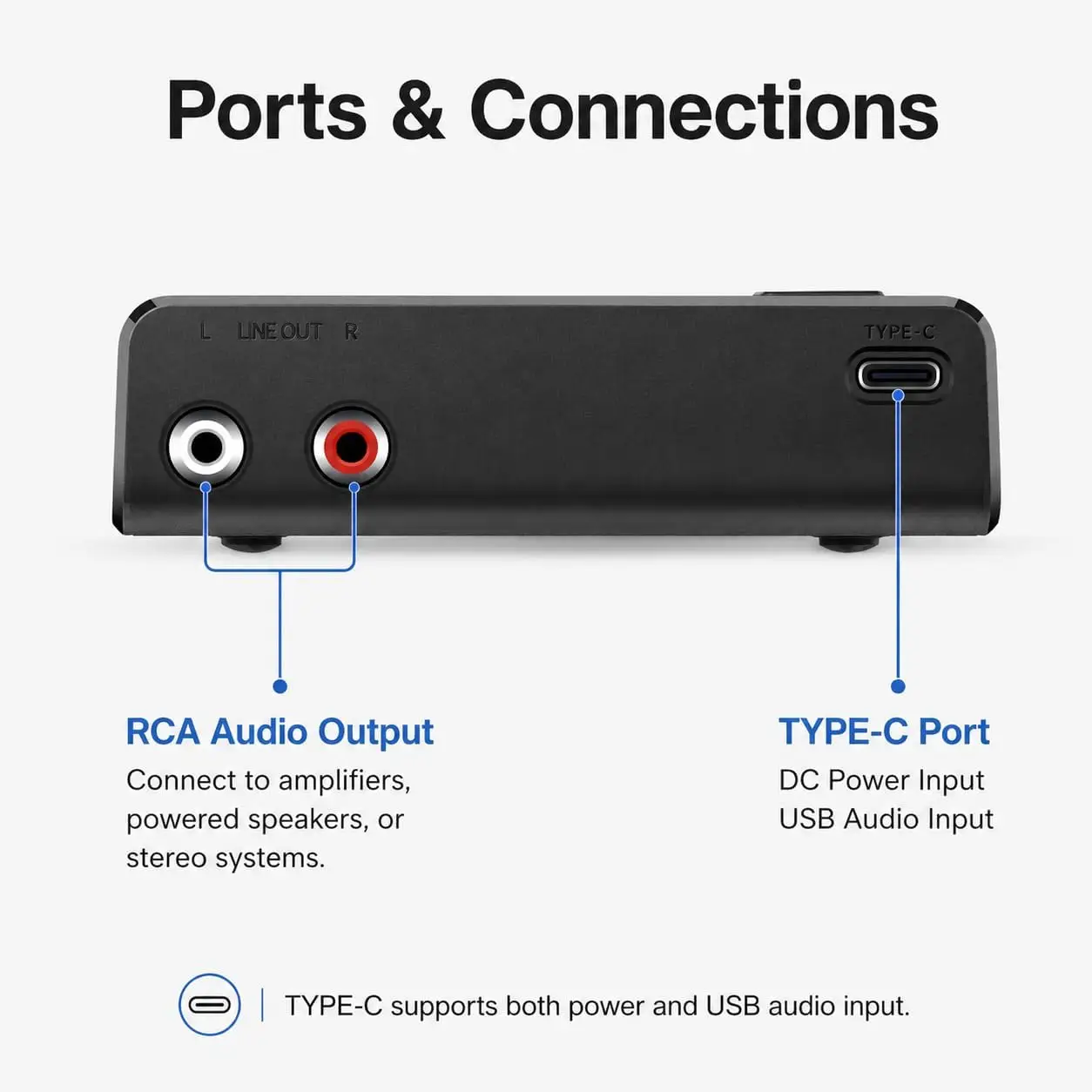
R1 Bluetooth Receiver for Home Stereo, RCA Out & USB-C Power/Audio Input
Bluetooth Receiver for Home Stereo Systems, Not a Bluetooth Amplifier or Transmitter – Turn your traditional stereo receiver, amplifier, powered speakers, or old wired audio system into a wireless music setup. The blafili R1 receives Bluetooth audio from your phone, tablet, or computer and outputs stereo sound through RCA L/R line out. It is a Bluetooth receiver only, not a transmitter and not an amplifier, and does not drive speakers directly. Qualcomm Bluetooth 5.2 with aptX Adaptive/HD – Built with…
Where an RCA Bluetooth Adapter Fits: Home, Car, and Powered Speakers
A vintage receiver or integrated amplifier with spare RCA inputs is the classic case. One small box adds streaming without touching the original electronics, which matters to collectors. For pro-style gear with balanced XLR inputs, an XLR Bluetooth receiver serves the same role; the blafili XLR Bluetooth Audio Receiver is one example. Standard RCA inputs need nothing more than a receiver with an RCA output.
Cars are the second big use case, and they come with the strictest requirements. A head unit or amplifier with auxiliary RCA inputs (common in older vehicles and amplifier-first audio builds) can take audio from a dedicated car Bluetooth receiver. A 12V cabin also adds electrical noise and heat that a living room does not present. The blafili CAR Bluetooth 5.2 Receiver, for example, connects to an amplifier through an RCA output, runs on 12V/24V systems, and requires an ACC/ignition trigger so it powers down with the car.
Powered speakers and turntables use the reverse direction. A turntable with a built-in preamp outputs line level that a Bluetooth transmitter accepts directly. Its RCA output can send records to wireless headphones or speakers, often the only way to add wireless to a self-contained system. A bare phono output needs a phono preamp first; without one, the signal stays quiet and dull.

blafili CAR Bluetooth 5.2 Receiver
Upgrade your vehicle audio with wireless Bluetooth streaming. blafili CAR connects to your amp through RCA output and works on 12V/24V systems—requires ACC/ignition trigger for operation.
Common Installation Pitfalls: Wiring, Ground Loop Hum, and Power Draw
Most complaints about otherwise decent adapters trace back to installation rather than the hardware itself. Three pitfalls cover nearly all of them.
Ground loop hum. A low hum that appears only when the adapter and the stereo draw power from different outlets is usually a ground loop. A ground loop isolator inline on the RCA cables, or powering both devices from the same strip, removes it in most cases. Routed or mismatched cables. RCA signal cables that run alongside power cords pick up noise, so keep signal runs short and separate from power.
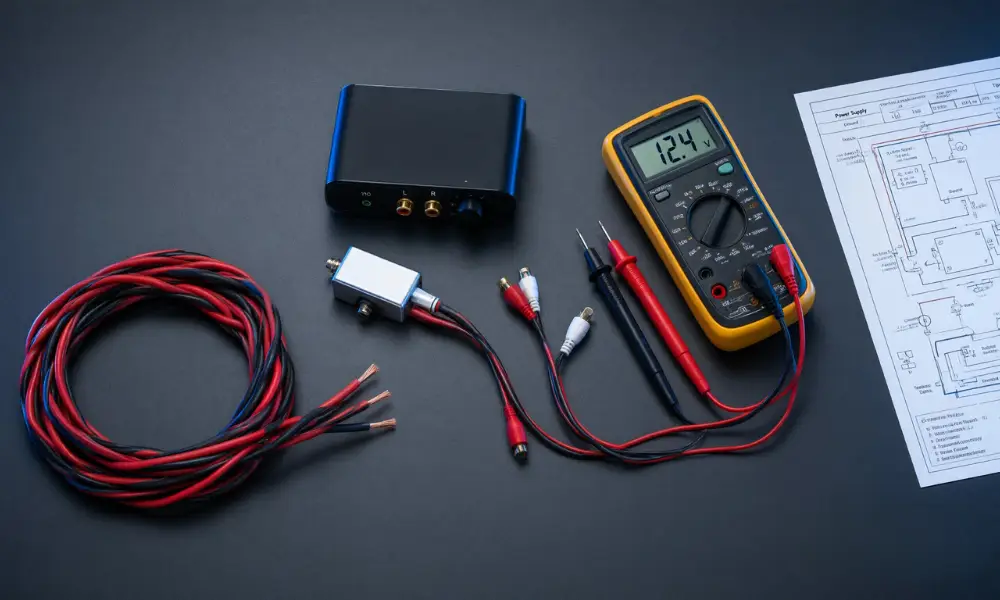
Parasitic battery drain in cars. Wiring an adapter’s power lead to constant battery instead of accessory (ACC) power keeps it alive around the clock. Over days of parking, that drains the battery, and it can produce turn-on pops as well. Connect the trigger to ACC so the unit sleeps with the ignition. Route signal cables down the opposite side of the car from the amplifier’s power wire to keep alternator whine out of the music.
Whatever the setup, 110V living room or 12V cabin, the checklist stays the same: confirm the direction, match the codec and power format, and keep the wiring clean. An RCA Bluetooth receiver chosen and installed that way tends to disappear into the stereo it completes.
FAQ
Is there an RCA to Bluetooth adapter?
Yes, in both directions. A Bluetooth-to-RCA receiver takes audio from your phone and outputs it through RCA jacks into a stereo or amplifier. An RCA-to-Bluetooth transmitter does the opposite: it takes audio from an RCA output and sends it to Bluetooth headphones or speakers. Both types are widely sold, so check which direction a listing supports before ordering.
How do I connect Bluetooth to RCA?
Connect the adapter’s RCA jacks to a line-level input such as AUX, CD, or Tape (red to red, white to white), power it on, and pair your phone from its Bluetooth menu. Then select the matching input on the receiver. Avoid the phono input, which expects a turntable’s tiny signal and will distort a line-level source.
Can you add Bluetooth to an old stereo?
Yes, in most cases. If the stereo has any spare RCA input, an inexpensive Bluetooth receiver adds streaming in minutes. Gear without a labeled AUX can often use a Tape or Video loop instead, and amplifiers with only balanced inputs can take an XLR Bluetooth receiver. The original electronics stay untouched, which matters for vintage equipment.
Do RCA Bluetooth adapters work on 12V car systems?
Many do, but check the label. Car-rated models run on 12V (some on 12V/24V) and include an ACC or ignition trigger, so they switch off with the car instead of draining the battery. Home-only USB models are not built for automotive voltage and noise. Pick a car-grade RCA Bluetooth receiver instead.


