
Free shipping on all orders · 2-year warranty · 30-day returns

Solution · vintage stereo

1978 sound, 2026 source.

Give the receiver you inherited a phone input — gently, reversibly, and with the warm sound intact.

1978 sound, 2026 source.

Old receivers gain Bluetooth through the same aux input they have always had. A vintage amp or receiver with RCA (phono/aux/tape) sockets accepts a modern Bluetooth receiver without modification — you add one small box behind the rack and nothing inside the beloved chassis is touched.

This matters for Marantz, Pioneer, Sansui and their peers: the phono stage, the transformers and the character stay original. The receiver simply becomes the source your phone streams into. If your machine only has a phono input, a cheap line-level adapter protects it from a full-strength signal — the guides below cover the wiring in detail.
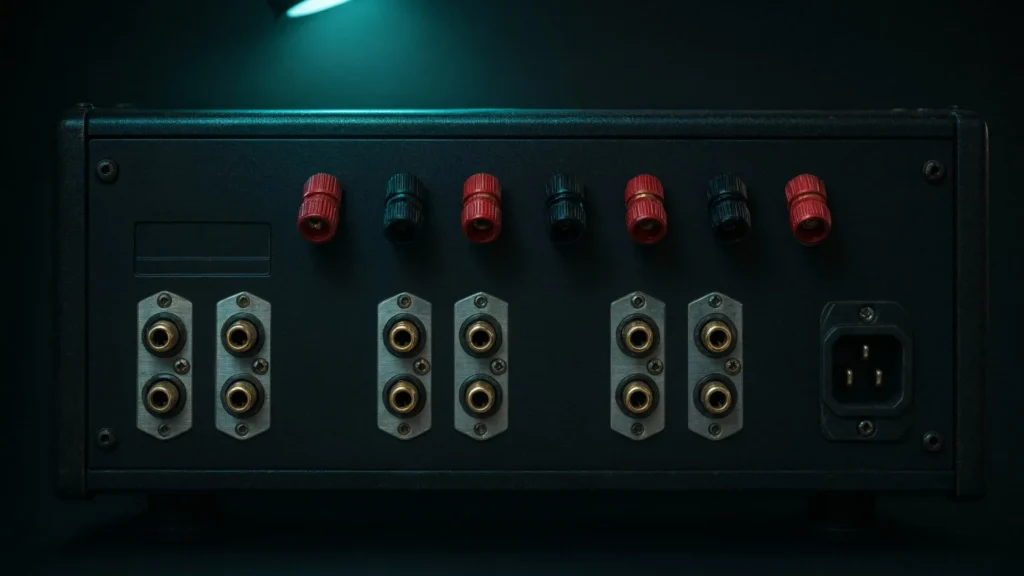
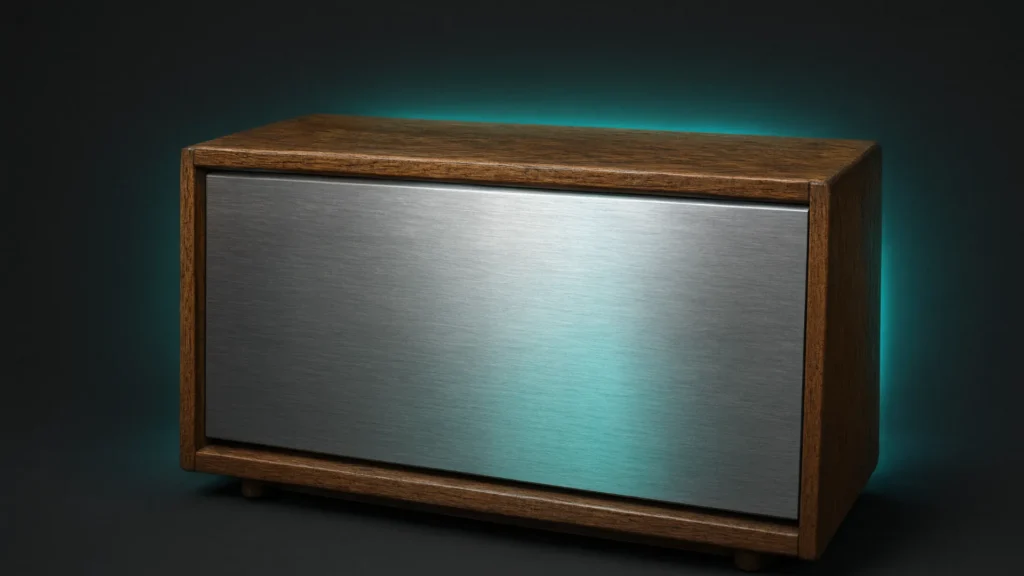
No aux, no USB, no Bluetooth The back panel has phono and tape loops — nothing a phone can plug into.
Do not want to modify it Original condition is value. Any solution must be fully reversible.
Hum and ground loops Sixty-year-old wiring plus new gear can hum — the fix is a grounding habit, not a new amp.

Three boxes, zero new cables.

Your phoneAny streaming app, any Bluetooth codec
blafili receiverRCA or XLR out — set to a gentle level
The vintage receiverAux or tape-in, tone controls as you like

Which input is safe

Vintage back panels are honest but confusing. Tape In, Aux, Tuner and Monitor are line-level and safe. The phono input is not: it expects the few millivolts a cartridge produces, so a receiver output fed directly into phono will overload the front end and sound harsh. If phono is the only option — some entry decks had no aux at all — put a phono-to-line attenuator between receiver and amp; they cost less than a cable.

Power is deliberately boring: any USB charger works. The receiver draws phone-charger levels of current, and a switched power strip lets the whole rack wake together. If the house wiring is old and the system hums, solve it at the ground: one path from turntable to amp, the receiver floating free on its double-insulated supply.

Which input is safe Vintage back panels are honest but confusing. Tape…

Keeping the character

The point of this scene is that nothing inside the chassis changes. Capacitors, transformers and the phono stage stay original — the receiver only replaces the source you would otherwise plug in. Tone controls behave exactly as the designer intended, because the signal arriving at the selector is the same line level a tuner would have delivered in 1978, just carried the last few meters by radio.

Keeping the character The point of this scene is that nothing inside…

The right box for this room.

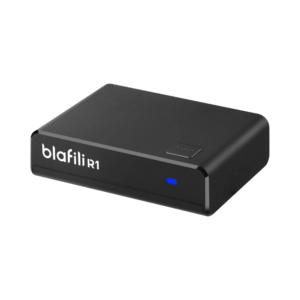
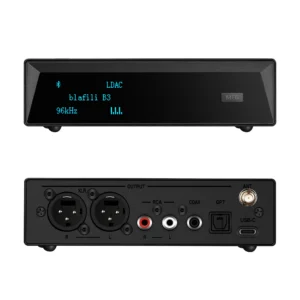
Why these two. The R1 is the museum-safe pick: one RCA pair out, USB-C power, no switches. Step up to the B3 when the system deserves optical or balanced XLR — and the OLED confirms the codec so you know the vintage iron is getting the full signal.

Set up once, forget the box.

  1. Find a line input. Aux, tape-in or tuner all work. Never feed a phono input directly without a line-level adapter.
  2. Start gentle. Set the receiver output and the amp volume low on first power-up; vintage volume pots drift with age.
  3. Kill the hum. One ground path only: if it hums, move the receiver power brick off the strip shared with the turntable.
  4. Label the input. A piece of tape saying “phone” saves the next owner of the house a service call.

Owners in the same seat.

A
Amazon Customer
Sep 27, 2026
★★★★★★★★★★

I bought this receiver to use with my speaker setup in the bedroom. I didn't want a cable dragging across the carpet, and needed a receiver that ran on USB C - this was a perfect fit; I wired up the RCA cables to my amp, plugged in the USB power, and away I went! Pairing via Bluetooth was nice and simple to my Google TV, and I was pleasantly surprised by the minimal amount of latency between the TV and audio.

I just turn on my amp and it connects, which is all I wanted - no fussing, no beeping, it just works!

blafili R1 Bluetooth Receiver →
S
St Antony The Great Coptic Church
Sep 22, 2026
★★★★★★★★★★

this is by far the best 100 bucks I ever spent. here is why . the sound is amazing. it gives you XLR outs that works with my sound system in a lot of settings . the sound coming out of those XLR outs are crystal clear. and there is absolutely no noise even with the large professional speakers such as QSC k12, and line array.
I used them with behringer wing, Midas and presonus and I was very impressed. I also used them with my home surround and stereo systems . with high end unforgiving speakers such as B&W, Vienna Acoustics etc
but the best part is the customer service.
I bought one device, more than a year ago and suddenly the xlr outs stopped working while both the analog and optic outs still worked . because I loved it so much I bought another one the same day but before it arrived I decided to send a message to the customer service and told them what happened
. within couple of hours I get a response from them saying " can you let us replace it for free" and of course I said yes , they asked me for the order number and a picture of the device which I provided. then they sent me a brand new one and told me to keep the old one even though I told him I bought a new one they still sent me the replacement. This is great customer service and a great product. Now I will keep the Three devices since I love t mm so much.
thank you guys very much.

blafili B3 Bluetooth Music Receiver →
A
Amazon Customer
Sep 18, 2026
★★★★★★★★★★

Receiving audio over Bluetooth 5.2 with aptX HD and aptX Adaptive support keeps the stream stable and clean without background noise, hiss or drops...

The continuous USB-C power design means the receiver stays on and ready on the cabinet without cutting out, auto sleeping, or a battery that dies. It also supports dual device connection, letting you stay paired to a phone and a laptop simultaneously so switching playback sources is seamless.
The total lack of electronic pairing beeps or loud voice prompts when connecting means it stays completely silent through your speakers until you actually hit play.

It functions strictly as an audio receiver though, so you cannot use it to send sound from a TV out to wireless headphones. The tiny plastic casing is also exceptionally lightweight, meaning stiffer RCA cables can easily drag the unit around on the desk if they are not weighted down or positioned properly.

All in all though, its simple, cost effected solution that brings older amplifiers up to modern tech without any annoying notification noises. Pretty much just plug and play.

4.5/5 rounded up.

blafili R1 Bluetooth Receiver →

Asked in this room.

Can I convert my old stereo to Bluetooth?

Yes — that is exactly this page. A Bluetooth receiver into any line input (aux/tape/tuner) makes a 1970s receiver stream from a phone in minutes, fully reversible.

How do I connect my phone to a 1970s receiver?

Receiver RCA outputs into the tape or aux input, USB power from any charger, pair once. If the only input is phono, add a phono-to-line adapter first.

Will it sound as good as the original sources?

With aptX HD or LDAC the stream itself is not the bottleneck; the receivers’ DACs are quieter than most 1970s tuners ever were.

Not sure which box fits your rack?

Tell us your speakers and how you listen — an engineer will recommend the right setup, cables included, within one business day.

Replies within 1 business dayUS East Coast hours
Free US shippingShips within 24 hours
2-year warrantyOn every single unit