

Quick Answer
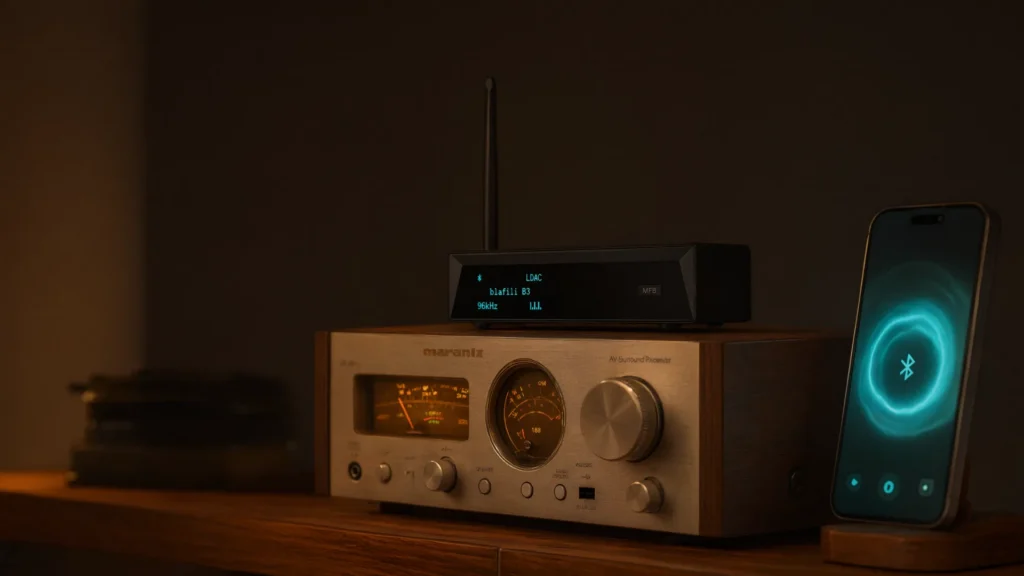
Yes — you can add Bluetooth to an old stereo in about ten minutes without opening the case: find a free line-level input on the back, connect a Bluetooth receiver’s output to it with a matching cable, power the receiver, and pair your phone from the Bluetooth menu. Three moves, really:
- Match an input — AUX, CD, Tape, or Line; never phono.
- Wire the receiver — its output into that input, red to red and white to white.
- Pair and play — power the receiver, select the input, stream.
The six-step version below expands each move for 1960s–1990s receivers, the input-safety chart explains which jacks are off-limits and why, and the buying-side overview lives in our Bluetooth adapter for old stereo systems guide.
What You Need
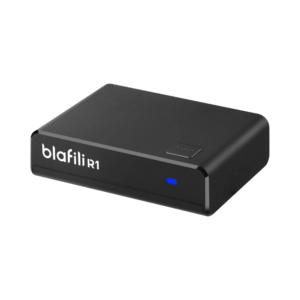
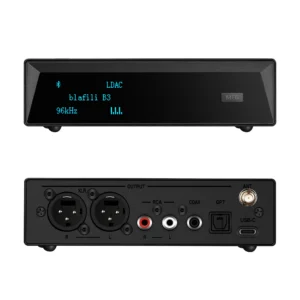
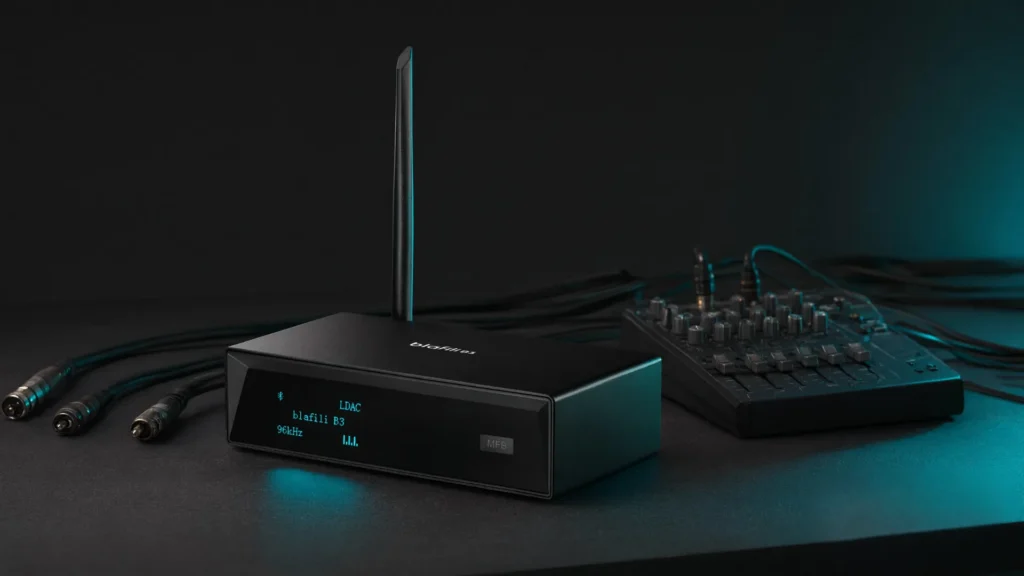
- A Bluetooth receiver whose output matches a free input. RCA in on the stereo → an RCA-output receiver (the budget blafili R1 covers most systems); optical or coaxial in → the blafili B3; a bare 3.5 mm aux → any receiver plus a passive 3.5 mm-to-RCA cable.
- One cable. RCA-to-RCA, 3.5 mm-to-RCA, or optical — whatever bridges the receiver’s output to your input. Any ordinary shielded cable does the job; for runs longer than a few meters, keep the audio lines away from power cords rather than paying for exotic wire.
- Power. A USB charger or outlet for the receiver’s USB-C lead — ideally on the same power strip as the stereo (that single choice prevents most hum before it starts).
- Your phone. No app required — pairing happens in the phone’s own Bluetooth menu.
If the back panel offers nothing but speaker terminals and a phono jack, stop before buying: the terminals are outputs and the phono jack is off-limits (the chart below explains both). The practical escape is a receiver with a digital output feeding a DAC or preamp input, or — on integrated systems — a line input hiding on the rear as “Tape In”, which almost every receiver of the era carries.
Add Bluetooth in Six Steps
About ten minutes, no tools beyond the cable — and every step reverses with one plug, so nothing you do here commits the receiver to anything:
- Read the back panel. Find an unused input labeled AUX, Line, CD, Tape, or Video and note the jack type — RCA pairs, 3.5 mm, or optical. This one look decides everything you buy.
- Pick the matching receiver. RCA input → RCA-output receiver; optical/coaxial input → a digital-output model; no spare labeled input → a Tape or CD loop carries the same signal, just select it when playing.
- Connect the cable. Receiver output → stereo input, red to red and white to white; for 3.5 mm, a passive cable does the job with no sound penalty.
- Power and pair. Plug the receiver into USB power, put it in pairing mode (usually a long-press until the LED blinks), and select it in your phone’s Bluetooth menu.
- Set the gain. Play something familiar, keep the phone’s volume fairly high for a strong clean signal, and do the listening-level riding on the stereo’s volume knob; if the sound distorts, step the phone back a notch.
- Test and troubleshoot. Select the input you wired, walk the room, and work the chain in order if anything is off — hum points to the ground-loop section below; silence means the input selector or the pairing, not the vintage gear.
Which Inputs Are Safe on a Vintage Receiver
The input labels are the safety chart — most 1960s–1990s receivers carry at least one safe jack:
| Input on the receiver | Verdict | Why |
|---|---|---|
| AUX / Line | Safe | Line-level, designed for external sources like this |
| CD / Tape In / Video In | Safe | Same line level — select that input when playing |
| Tape monitor loop (In + Out) | Safe | Use the In side; press Tape/Monitor to route it |
| PHONO | Never | RIAA equalization + enormous gain for a turntable’s millivolt signal — a line-level source clips it hard and can damage the stage |
| Mic in (rare on hi-fi) | Avoid | Microphone gain stage, wrong level and voicing |
| Speaker terminals | N/A | Outputs, not inputs — nothing external plugs into them |
The phono rule is absolute: it is the one jack on a vintage receiver that can be harmed by this project rather than merely annoyed. If the receiver’s only spare input is phono, add an external line-level input instead of adapting — or use a receiver with digital output into a downstream DAC input. The deeper bench notes are in how to add Bluetooth to an old stereo and the vintage-specific RCA setup for vintage stereos.
Era quirks are worth a minute of planning. Japanese and American receivers from the 1970s onward almost always speak RCA, so the standard plan applies unchanged. European units of the 1960s–70s (Grundig, Telefunken, Dual and their peers) often terminate their tape circuits in DIN connectors — a passive DIN-to-RCA adapter cable bridges them to a normal receiver with no electronics in the path. Console and radiogram systems with no external inputs at all are the one genuine limit: there is nothing to plug into, and the honest answer is a modern amp between the Bluetooth receiver and the console’s speaker switching, or leaving that particular jewel original.
Fixing Ground Loop Hum
A low, steady hum — the 50/60 Hz mains note and its first overtone — that appears only when the adapter and the stereo draw power from different outlets is a ground loop: two paths to ground disagreeing through the signal cable’s shield. It is an electrical geometry problem, not a defect, and it follows the wiring, which is why it can vanish when you move one plug.
Fixes, in the order to try them: power both devices from the same strip; keep the RCA (or 3.5 mm) signal cables away from power bricks and cords; and if the hum survives both, an inline ground loop isolator on the signal cable removes it in the vast majority of cases. The full symptom-by-symptom list — including hiss and turn-on pops — is in the RCA adapter guide’s fixes section.
Codec and Latency Tips for Music
Music timing is forgiving — unlike video, nothing on screen needs to match the sound, so latency never enters the picture for a stereo. Codec choice is about fidelity: SBC streams acceptably for radio and background listening, while aptX HD and LDAC carry noticeably more detail when your phone supports them and the receiver negotiates them — the pairing rules and bitrate table are in our codec comparison.
Two habits keep the wireless link at its top mode in a living room. Place the receiver clear of the Wi-Fi router and metal racks — 2.4 GHz congestion is the usual cause of dropouts, and distance from the router matters more than distance from your phone. And when quality sounds suddenly flat, re-pair: the link can settle into a lower codec mode after interference and will not climb back until the devices renegotiate. One vintage-specific note: the receiver’s DAC now feeds an amplifier that may be fifty years old, so a clean output stage (a named DAC, a solid signal-to-noise figure) matters more here than on a modern system.
Keeping the Vintage Character
The best part of this upgrade is what it does not change. The adapter lives outside the chassis — no internal wiring, no drilled panels, no solder. The faceplate, knobs, and original remote keep every job they ever had; the receiver simply believes a new source component is attached. To revert, unplug one cable and the system is stock again, which is exactly why collectors prefer this route to modified internals.
Two small habits keep the setup invisible: tuck the receiver behind the cabinet with its cable dressed along the back (a display-equipped model such as the B3 shows the track without touching anything), and leave both devices on the same power strip so switching on the socket wakes the whole chain together. Treat the project as upgrading the stereo without replacing anything — because that is precisely what it is. If the speakers, not the receiver, are the wired half, the same logic applies: see making wired speakers wireless.
Coexistence is the last worry to retire. The turntable keeps its phono input and its ground wire exactly as they were — the adapter simply occupies a different jack, and you choose between them with the input selector, the same way the receiver always switched between a tape deck and a tuner. Nothing about the Bluetooth side changes the phono stage, the tone controls, or the speaker outputs; from the inside, the stereo cannot tell a receiver from the CD player it once expected to meet.