

LDAC vs AAC: The Short Answer
LDAC is not automatically better than AAC: the result depends on the codec actually negotiated by both devices, the selected mode, radio conditions, and the rest of the audio chain.
LDAC can carry a higher nominal Bluetooth bitrate, while AAC is widely used for efficient lossy audio and is especially common across Apple devices. The useful question is not which label always wins, but which codec your source and receiver can both use reliably in your actual listening setup.
What LDAC and AAC Actually Mean
What is LDAC?
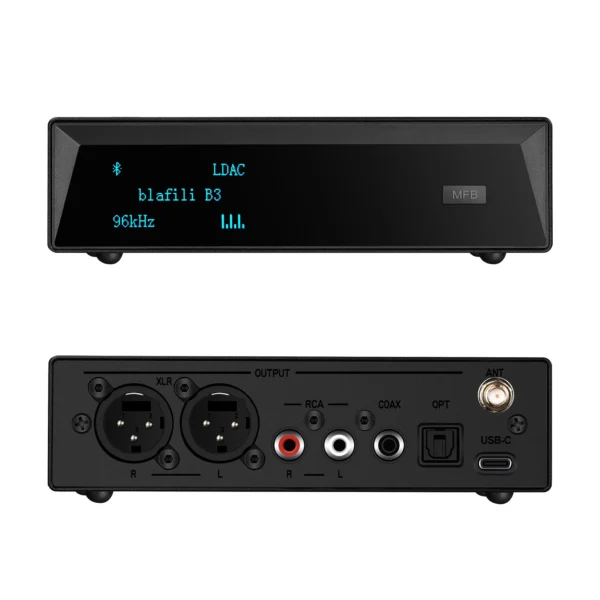
LDAC is a Sony-developed audio coding technology used over compatible Bluetooth connections. Sony documents three connection-quality modes, with the highest setting reaching 990 kbps. That number describes the Bluetooth transmission mode; it does not guarantee that every source file, phone, receiver, or listening environment will deliver an audible advantage.
What is AAC?
AAC stands for Advanced Audio Coding. It is a lossy codec used for files and streams, and it can also be negotiated as the codec on an A2DP Bluetooth link. Those are related but distinct stages: a service may deliver AAC while the Bluetooth hop uses another codec, or the source may transcode before transmission.

Sound Quality: Compare the Whole Signal Path
Bluetooth codec labels describe one part of the path; they do not by themselves prove lossless playback, lower latency, longer battery life, or an audible improvement. Source encoding, any transcoding, the negotiated Bluetooth mode, RF stability, the receiver implementation, DAC, amplifier, speakers or headphones, and the listening environment can all affect the result.
| Question | LDAC | AAC |
|---|---|---|
| What is the main appeal? | Higher available Bluetooth transmission modes on compatible equipment | Efficient lossy coding and broad use across services and devices |
| What must be compatible? | Both Bluetooth endpoints must support and negotiate LDAC | Both endpoints must support and negotiate AAC for the Bluetooth hop |
| Is it automatically lossless? | No | No |
| Does the name predict sound quality? | No; implementation and conditions matter | No; implementation and conditions matter |
Latency and Connection Stability
Do not choose between LDAC and AAC from a universal latency claim. End-to-end delay depends on buffering and implementation across both devices and the application. For video, gaming, or live monitoring, test the exact source-receiver combination and confirm that lip-sync or monitoring delay is acceptable.
Android’s Bluetooth stack can negotiate among codecs supported by both endpoints, while manufacturers can configure codec priorities and behavior. A phone showing an LDAC option does not mean the active link will stay at its highest mode in every radio environment.

Device Compatibility Comes First
- Android: LDAC is included in the Android Open Source Project Bluetooth audio stack, but actual availability and defaults still depend on the device maker, OS build, and connected receiver.
- Apple devices: Apple documents AAC support across many products. Apple’s Bluetooth guidance also states that Bluetooth connections are not lossless, so an AAC or lossless source badge should not be confused with a lossless Bluetooth path.
- Receivers and headphones: Check the specification for both ends. If either endpoint does not support the desired codec, the connection will use a mutually supported alternative.

Battery Life and Performance
Codec selection alone is not enough to predict battery runtime. Radio conditions, device hardware, volume, signal processing, screen use, firmware, and how a vendor implements each codec all contribute. Treat battery claims from a different phone or receiver as a starting point, not a guarantee for your setup.
A Practical Way to Choose
- Confirm which codecs both the source and receiver support.
- Verify the codec actually active during playback instead of relying on a settings label.
- Compare at matched volume using the same track and listening position.
- Prefer the mode that remains stable and sounds good in your real environment.

Conclusion: Is LDAC Better Than AAC?
LDAC is the stronger candidate when both endpoints support it, the connection is stable, and you want to test its higher transmission modes. AAC is often the practical choice when it is the best mutually supported option or when you are using an Apple-centered setup. Neither choice overrides the quality of the rest of the system.
If you are also comparing Qualcomm Bluetooth codecs, read our guide to aptX codecs and Bluetooth audio receivers.
Official References
- Sony Help Guide: LDAC playback quality settings
- Android Open Source Project: Bluetooth services and codec configuration
- Apple Support: About lossless audio in Apple Music
- Bluetooth SIG: Advanced Audio Distribution Profile