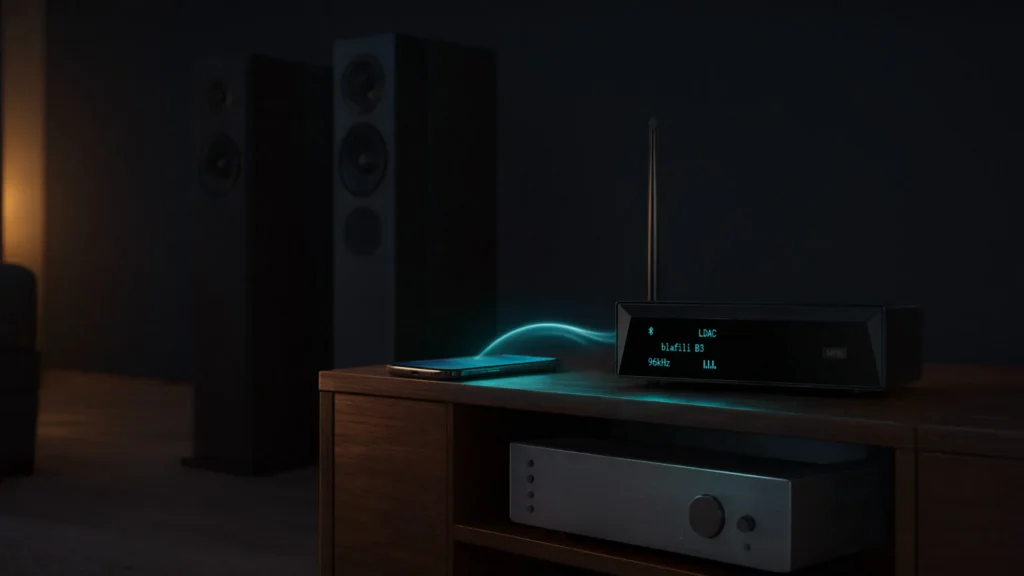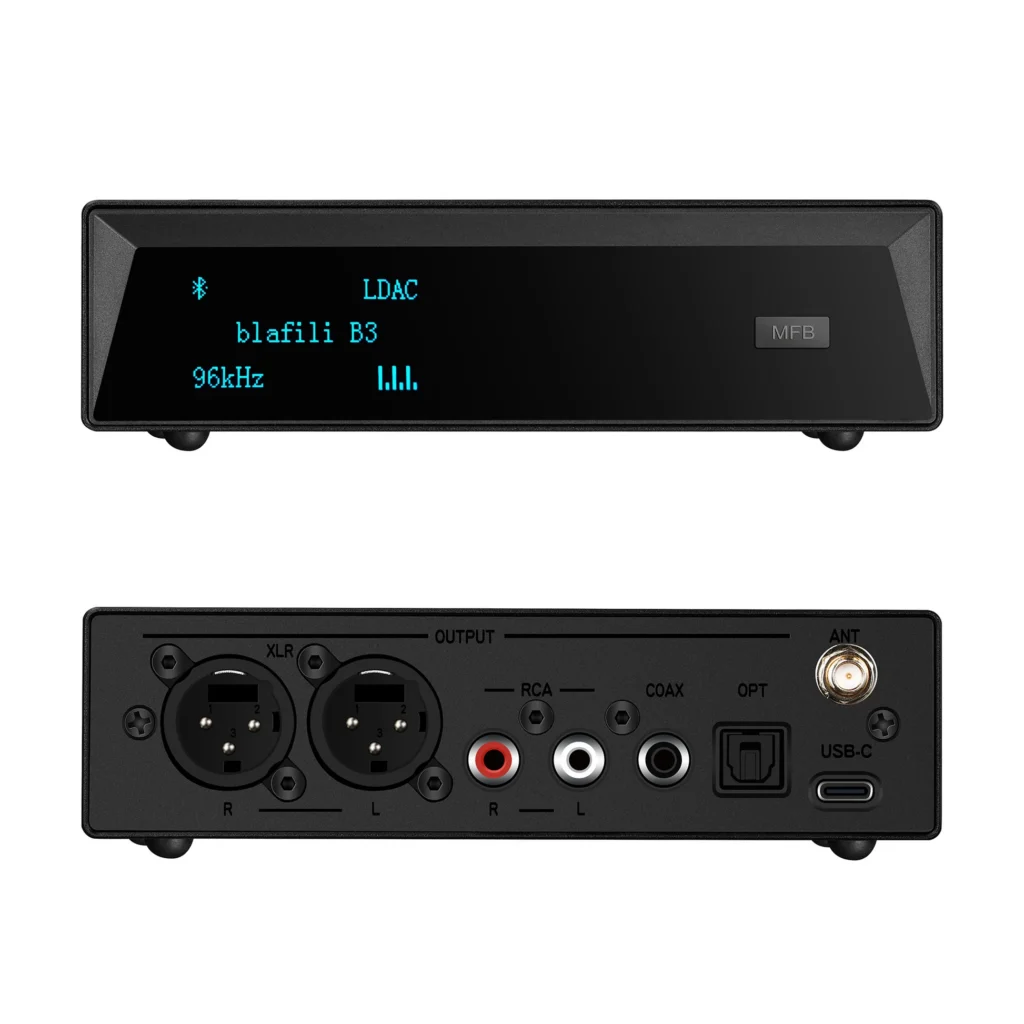



Imagine controlling your entire home theater system without tangled wires or outdated ports. An audio receiver with Bluetooth isn’t just a luxury—it’s a necessity for modern audiophiles. Whether you’re streaming music from your phone or syncing a 4K movie, this device bridges the gap between convenience and high-fidelity sound. Let’s dive into why it’s a must-have and how to choose the perfect one.

Why an Audio Receiver with Bluetooth is a Game-Changer for Your Home Theater
Gone are the days of crawling behind your TV to plug in cables. A Bluetooth-enabled audio receiver lets you stream music, movies, and podcasts wirelessly from smartphones, tablets, or laptops. Picture this: hosting a party where guests can queue their favorite tracks directly from their devices. No more awkward pauses to switch playlists!
But it’s not just about convenience. Modern models support high-resolution audio codecs like aptX HD and LDAC, ensuring studio-quality sound. Plus, Bluetooth 5.0 reduces latency to under 40ms—perfect for syncing dialogue with video.
Top 5 Features to Look for in an Audio Receiver with Bluetooth
- Multi-Room Audio Support: Sync speakers across rooms via apps like Sonos or HEOS.
- HDMI ARC/eARC: Transmit uncompressed audio from your TV to the receiver.
- Voice Control: Compatible with Alexa, Google Assistant, or Siri.
- Wattage (80W–150W per channel): Ensure enough power for large rooms.
- Dolby Atmos/DTS:X: For 3D surround sound.
Pro Tip: Always check for firmware updates—manufacturers often add new features post-launch!
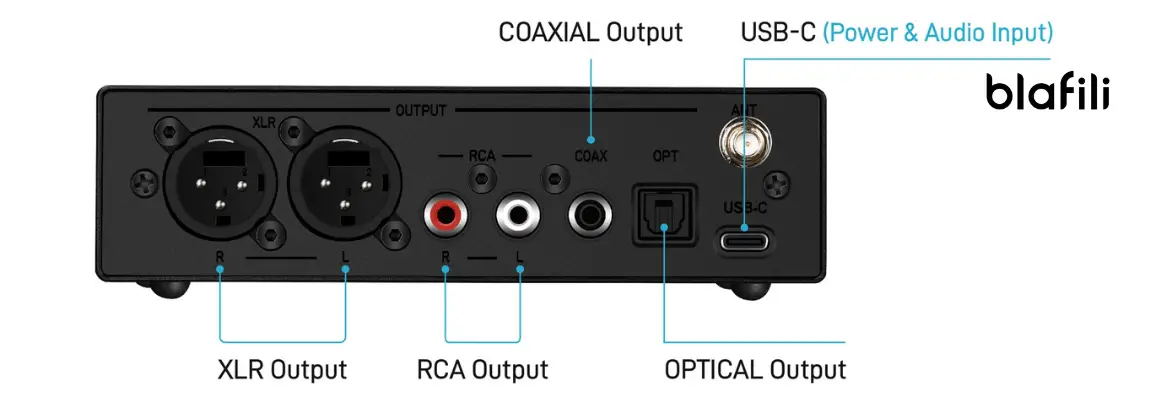
How to Connect Your Audio Receiver with Bluetooth in 5 Easy Steps
- Power on the receiver and enable pairing mode (usually a dedicated button).
- Open your device’s Bluetooth settings and select the receiver.
- Accept the pairing request if prompted.
- Adjust volume levels on both devices to avoid distortion.
- Test with a high-bitrate song or movie to ensure stability.
Troubleshooting: If the connection drops, move the device closer or remove obstacles like walls.

Audio Receiver with Bluetooth vs. Traditional Receivers: Which Wins?
| Feature | Bluetooth Receiver | Traditional Receiver |
|---|---|---|
| Wireless Connectivity | Yes | No |
| Latency | <40ms (Bluetooth 5.0) | N/A |
| Sound Quality | Lossless (with aptX) | Analog (uncompressed) |
| Setup Complexity | Easy | Requires wiring |
While traditional receivers offer purist sound, Bluetooth models win for flexibility.

Avoid These 3 Mistakes When Using a Bluetooth Audio Receiver
Mistake 1: Ignoring signal interference from microwaves or Wi-Fi routers. Fix: Use the 5.8GHz band if available.
Mistake 2: Skipping firmware updates. Result: Buggy performance or security risks.
Mistake 3: Overlooking battery drain on mobile devices. Solution: Keep your phone charged or use a dedicated streaming device.
Best Audio Receivers with Bluetooth for Every Budget in 2025
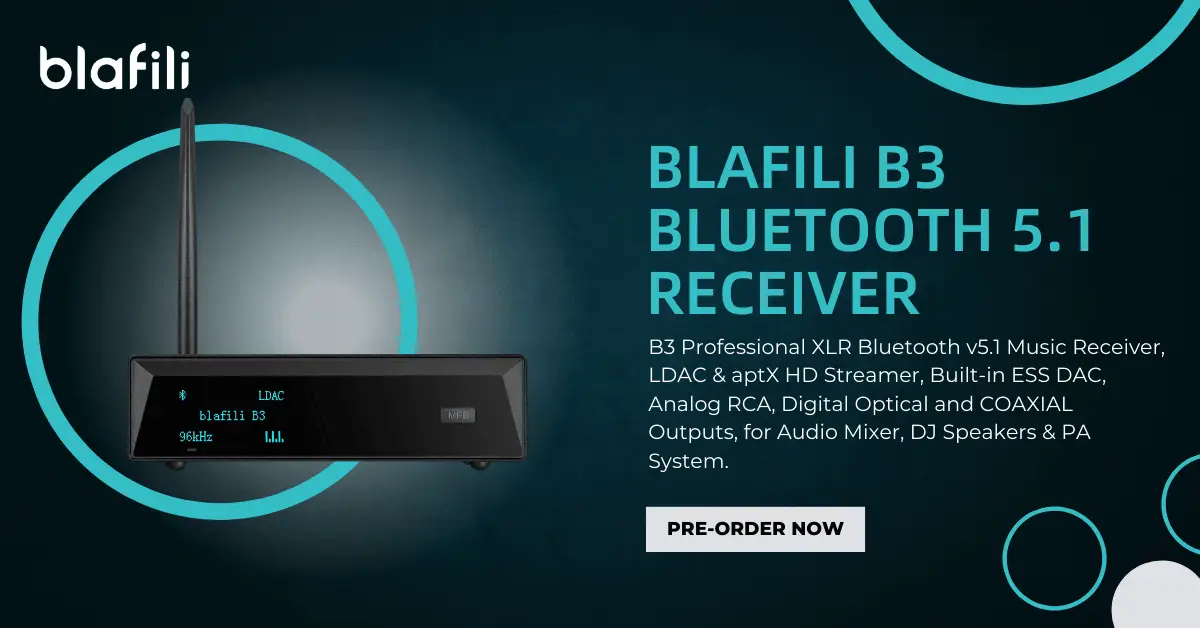
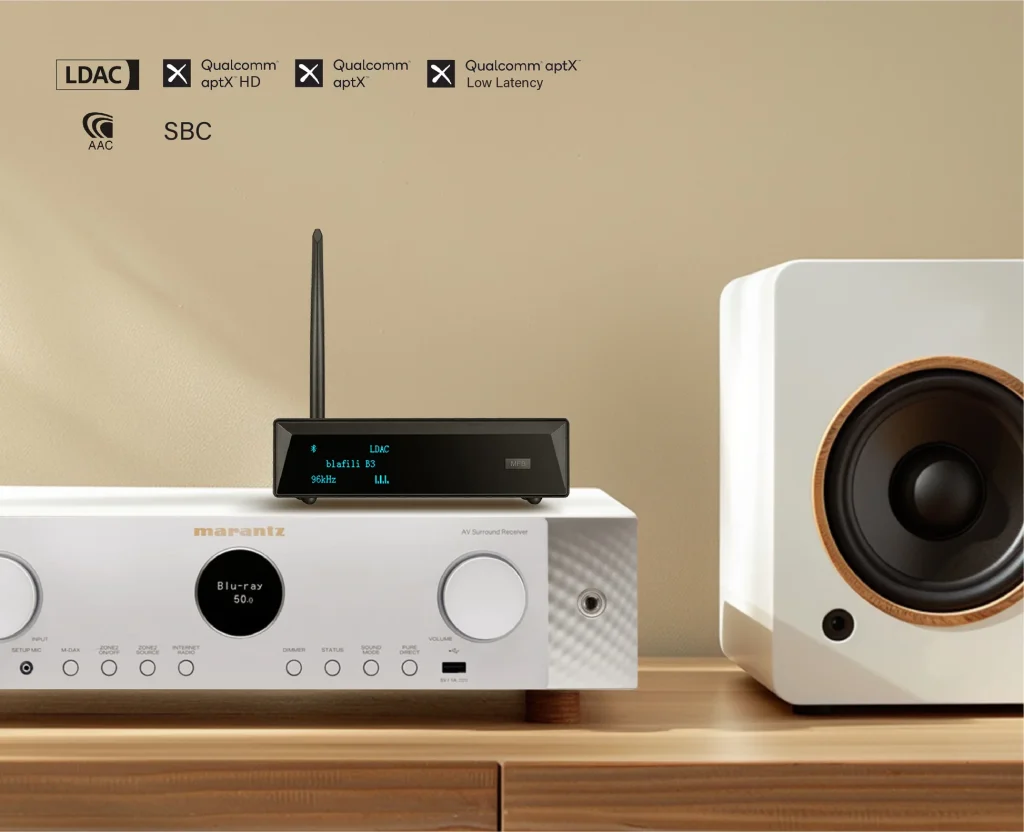
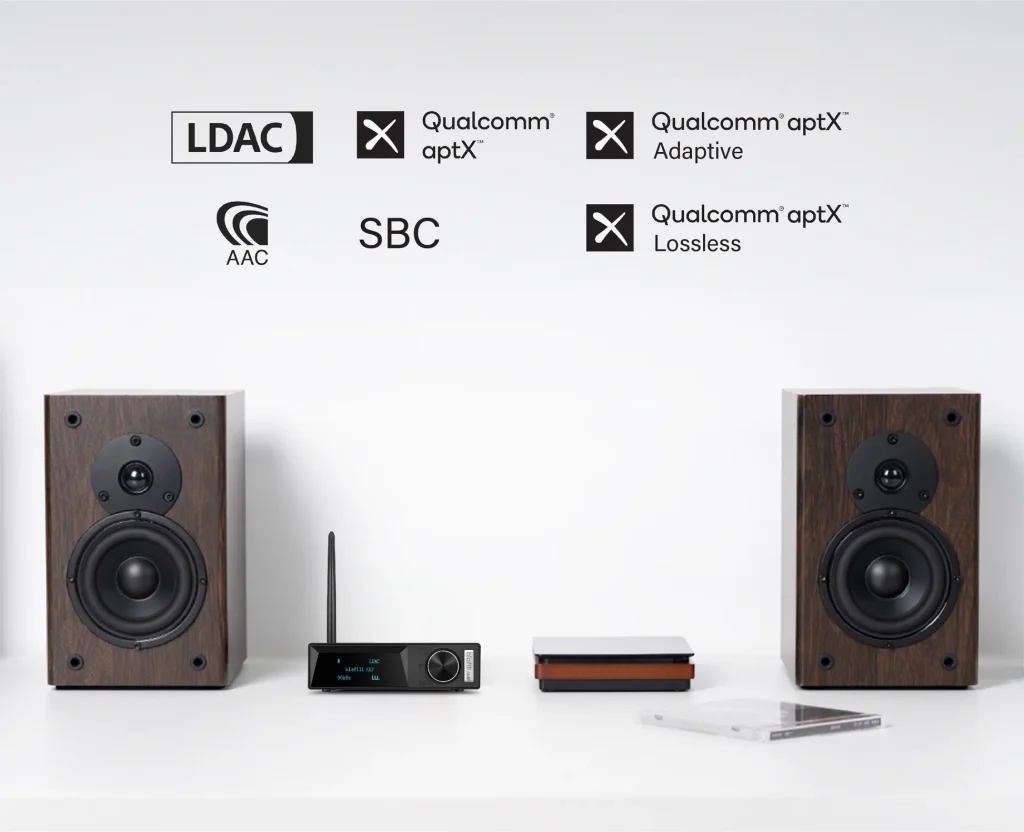
- Budget ($100–$400): blafili B3 (supports LDAC, aptX HD, aptX LL, aptX, AAC, SBC codecs).
- Mid-Range ($500–$800): Denon AVR-S960H (Dolby Atmos + HEOS).
- Premium ($1,000+): Marantz SR8015 (8K + IMAX Enhanced).
Expert Pick: The Sony STR-DH790 balances price and performance for most users.
FAQs
What devices work with a Bluetooth audio receiver?
Most smartphones, tablets, laptops, and smart TVs support Bluetooth. Check for A2DP/AVRCP profiles.
Can I connect multiple speakers to one receiver?
Yes! Use “party mode” or dual-pairing features on advanced models.
Does Bluetooth reduce sound quality?
With aptX HD or LDAC, the difference is negligible. Avoid SBC codecs for critical listening.
How far can I be from the receiver?
Typically 30 feet, but walls or interference may reduce this.
Do all receivers support voice assistants?
No—look for “Alexa Built-in” or similar labels.
Can I use Bluetooth and wired speakers together?
Absolutely! Hybrid setups are common for home theaters.

Conclusion
An audio receiver with Bluetooth is your ticket to a clutter-free, future-ready sound system. From movie nights to impromptu dance parties, it adapts to your lifestyle. Ready to upgrade? Use our buying guide and avoid pitfalls to make the best choice! ?