

What Is a 1/4″ TRS Bluetooth Receiver?
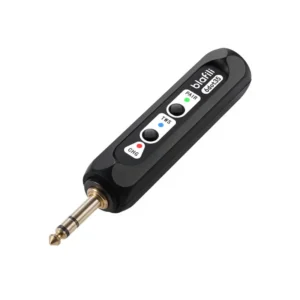
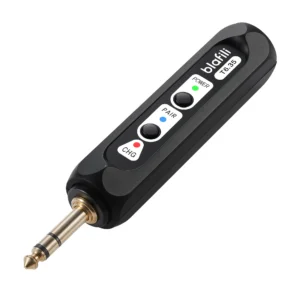
A 1/4″ TRS Bluetooth receiver is a Bluetooth music receiver whose plug is the 1/4-inch (6.35 mm) TRS jack that guitar amps, bass amps, PA speakers, powered mixers and studio monitors already carry. Your phone streams over Bluetooth; the receiver decodes the stream and hands a clean line-level signal to that amp or speaker through its own plug. Nothing in the amp changes — the receiver simply occupies the input the way a cable from a pedal or mixer would.
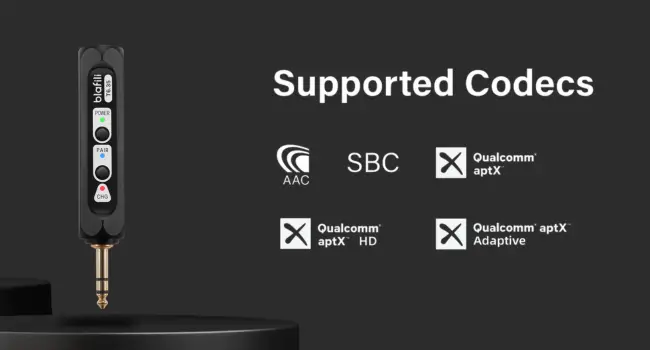
The 6.35 mm plug is the reason to choose this category at all. Where a small 3.5 mm receiver needs a fragile adapter chain before it can speak to stage gear, a dedicated 1/4 inch Bluetooth receiver plugs straight into the jack. The blafili 6dot35 is built exactly this way: a gold-plated 1/4″ TRS connector, aptX HD and aptX Low Latency codecs, and a 10-hour battery — the whole receiver lives in the plug’s body.
Where a TRS Receiver Fits (and Where It Doesn’t)
The 1/4″ plug speaks the instrument-amp and mixer dialect. Match the receiver to the gear on the other end of the cable:
| Device with a 1/4″ input | Plugs straight in? | What to expect |
|---|---|---|
| Guitar or bass amp | Yes | The amp becomes a Bluetooth speaker for streaming music or backing tracks at line level — select the input as usual |
| Powered PA speaker | Yes | Line-level input; set the speaker’s volume as you would for any wired source |
| Powered mixer | Yes | The receiver occupies one channel input — keep its level moderate and ride the channel fader |
| Studio monitor (1/4″ input) | Yes | Same line-level signal a mixer would feed it |
| Bluetooth headphones, speakers or microphones | No | A receiver only listens — it brings audio in and cannot send audio out to wireless headphones or speakers |
Direction is the one distinction worth double-checking before buying. A receiver brings your phone’s music into an amp or speaker. Sending a mixer’s output out to wireless speakers is the opposite job — that is a transmitter’s, covered in our Bluetooth transmitter guide and by the blafili T6.35, which plugs into a mixer or PA output and streams to one or two Bluetooth speakers over Bluetooth 5.2 with aptX Adaptive.
How to Connect a 1/4″ Bluetooth Receiver to a Guitar Amp
Four steps, about a minute once the receiver is charged:
- Check the input. A free 1/4″ input on the amp — aux/line on guitar and bass amps, any channel input on powered mixers.
- Plug in and power up. The receiver goes straight into the jack; run it from its built-in battery or keep it on USB power for permanent installs.
- Pair. Press PAIR, pick blafili 6dot35 in your phone’s Bluetooth menu, and the LED goes solid when the link is live.
- Set the levels. Keep your phone’s volume fairly high for a clean signal and control the listening level on the amp, the way you would with any wired source.
The same four moves cover PA speakers and powered mixers — only the volume knob you ride changes. Range is the usual 2.4 GHz contract: up to 32.8 feet (10 m) line of sight, with walls and crowded Wi-Fi air shrinking it.
Power, Placement and Range on a Gig Night
Stage power is the practical difference between a battery gadget and a piece of the rig. The 6dot35 runs about 10 hours per charge from its built-in battery — enough for a long rehearsal or back-to-back sets — and recharges in roughly two hours from any USB-C source, wall plug to power bank. For the house rig that never moves, leave it on USB power permanently and the battery question disappears entirely; standby draw is under 50 µA, so leaving it plugged into the amp’s spare USB port is safe even between gigs. The whole unit measures 135 × 30 × 25 mm — it vanishes into a gig bag pocket, and nothing sticks out past the jack it occupies.
Placement follows the same logic as any 2.4 GHz radio: the receiver hears your phone, not the room, so keep it on the amp’s near side rather than behind a metal rack, and remember the 2.40–2.48 GHz band it shares with Wi-Fi. When a crowded venue makes the link drop, distance from the wireless router matters more than distance from your phone. None of this is tuning ritual — it is the same physics every Bluetooth device lives with, applied once at setup instead of every song.
Sound Quality: What the Numbers Say
Specifications beat adjectives, so here is the whole measured story: signal-to-noise of ≥101 dB, distortion of ≤0.1%, and a frequency response of 20 Hz–20,000 Hz — the numbers that describe a clean line-level source rather than a toy dongle. With aptX HD negotiated against a compatible phone, the stream carries noticeably more detail than the SBC baseline; with aptX Low Latency, backing-track and video apps stay in sync on stage.
One more trick hides in the USB-C port: plugged into a computer, the 6dot35 doubles as a USB DAC at 16-bit/48 kHz, so the same unit that wirelesses a guitar amp at night can feed studio monitors from a laptop by day. For the concepts behind the converter — and why a named DAC matters in any Bluetooth receiver — our what-is-a-DAC explainer keeps it short.
What to Check Before You Buy
Codecs first. The receiver’s codec list only matters when your phone speaks the same language: aptX HD carries noticeably more detail than the SBC baseline, aptX Low Latency keeps video and backing-track apps in sync, and AAC serves iPhone users — every Bluetooth device negotiates SBC as the floor.
Then the mechanical details that stage gear punishes. A gold-plated, solidly-seated 1/4″ connector beats a wobbly molded plug the first time someone trips near the amp. Battery life decides whether the receiver survives a gig night — look for 10-hour-class playback and USB-C charging you can run permanently from a power bank. And if you play in stereo, check True Wireless pairing: two 6dot35 units pair into a true left/right set for two-amp rigs.
One honest limit, printed on every listing that respects you: these are receivers. They add Bluetooth listening to an amp — they do not turn your guitar into a wireless instrument, and they will not pair with Bluetooth headphones. For sending an amp’s output to wireless speakers, the transmitter direction is the tool: see blafili T6.35.
TRS, RCA or XLR: Picking the Right Plug for the Rest of the Rig
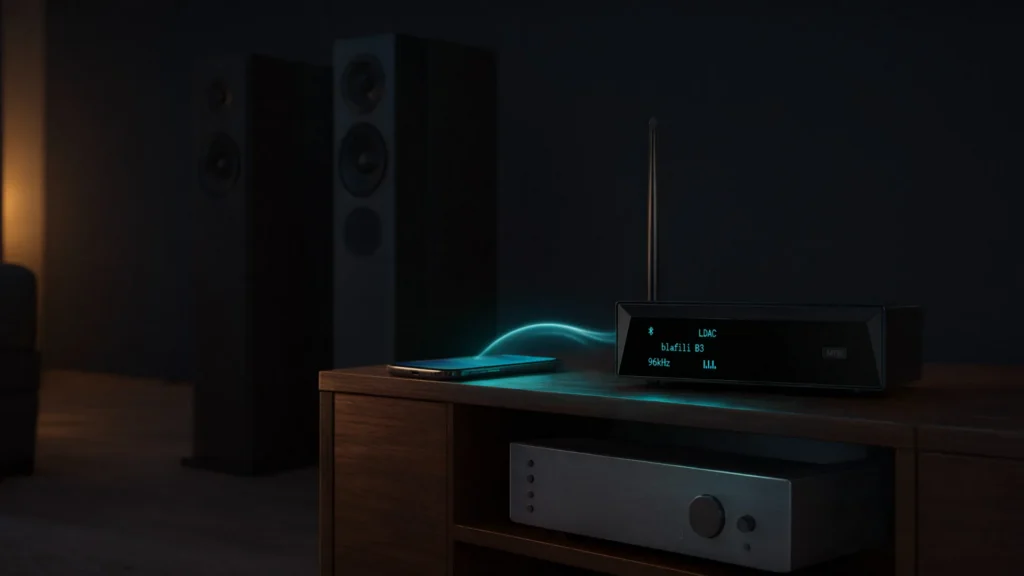
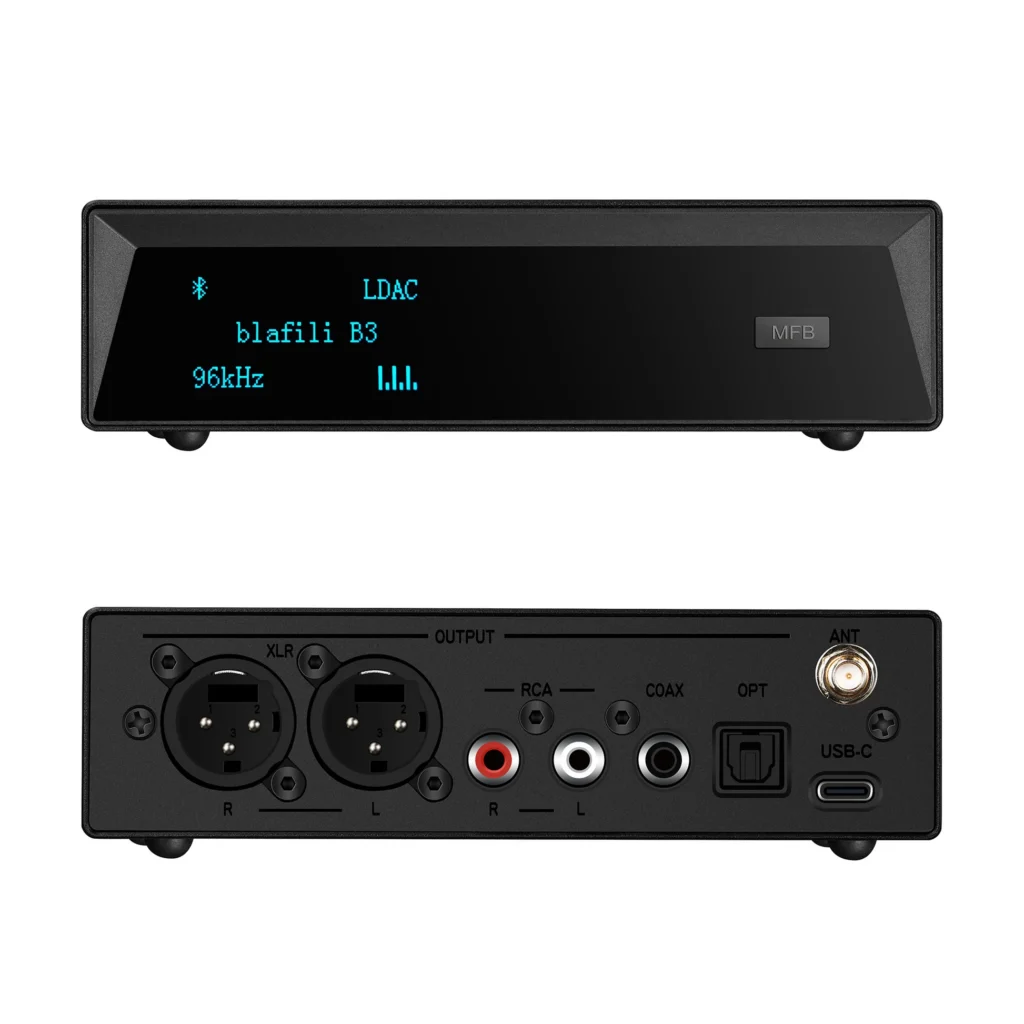
The 1/4″ jack is one dialect in a family. RCA is the home hi-fi standard — red-and-white pairs on stereo receivers and integrated amps (our RCA Bluetooth adapter guide covers that route). XLR is the balanced, lockable pro connector for long runs and racks. TRS sits between them: unbalanced like RCA but at home on stage gear, and the plug that instrument amps and PA cabinets actually carry. If the wire side of that comparison is the question, our XLR vs TRS cable explainer separates the plugs; the wider receiver landscape is mapped in the Bluetooth audio receiver guide.