

What Is Bluetooth? Frequency, Codecs, and How It Works
What is Bluetooth? Learn how the 2.4 GHz radio standard hops 79 channels to replace cables, from 1994 origins to Bluetooth 5.4, LE Audio, and LDAC.
Read More
The blafili journal
Guides from the blafili workbench: receiver and transmitter buying guides, codec deep-dives and scene-by-scene setup playbooks — everything we know about setting sound free, in plain English.
aptX Low Latency holds Bluetooth audio lag near 40 ms, vs. roughly 300 ms on SBC or AAC. See the codec latency table and what both ends need. Learn more.
Read More Codecs & technology
What is Bluetooth? Learn how the 2.4 GHz radio standard hops 79 channels to replace cables, from 1994 origins to Bluetooth 5.4, LE Audio, and LDAC.
 Codecs & technology
In today's world of wireless audio, latency —the delay between transmitting and receiving sound—has long been a challenge. For most people, a slight delay isn’t noticeable. However, when it comes to high-quality audio experiences such as…
 Receiver guides
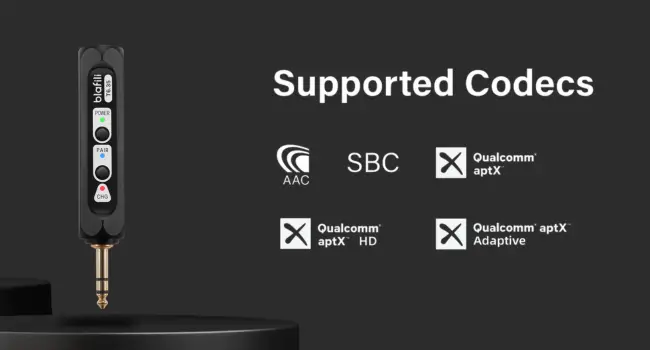
A 1/4″ (6.35 mm) TRS Bluetooth receiver plugs straight into the jack that guitar amps, PA speakers, powered mixers and studio monitors already have — no adapter chain, no cables. This guide explains where a TRS receiver fits, which inputs it works with, a four-step connect walkthrough for guitar amps, and what to check before buying.
 Codecs & technology
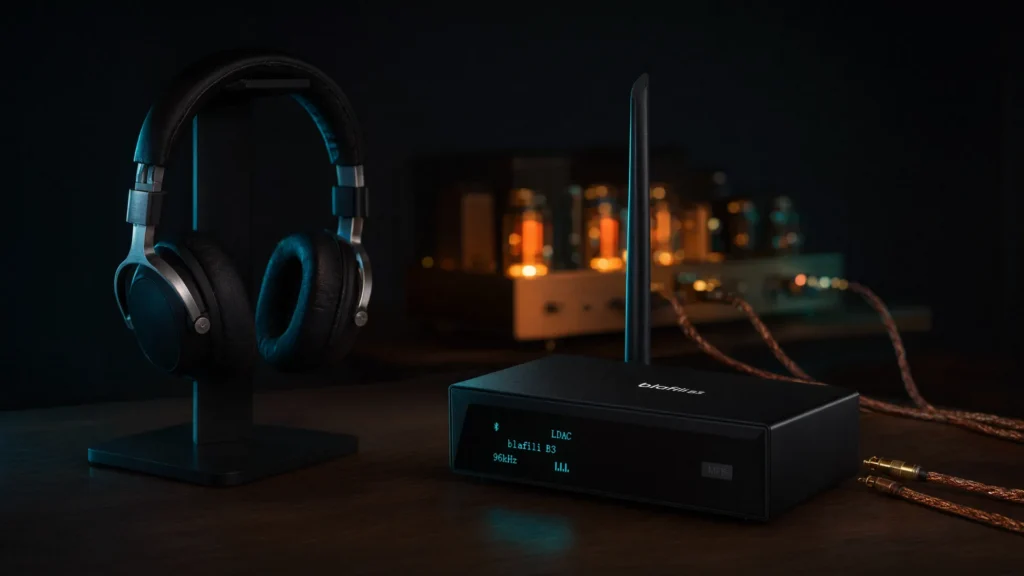
A DAC — digital-to-analog converter — is the chip that turns digital audio, a stream of numbers, into the analog electrical signal your headphones and speakers actually play. This page explains why digital audio needs one, how a DAC differs from a sound card and an amplifier, when you need a better one, and where it lives inside a Bluetooth receiver.
 Codecs & technology
Every Bluetooth receiver contains a DAC, and its quality — together with the codec — decides how close wireless comes to wired. This guide explains what the DAC contributes to sound quality, how hi-res codecs like LDAC feed it, the real specs inside a hi-fi Bluetooth DAC (ESS ES9018K2M, −120 dB THD+N, +127 dB dynamic range), and how to choose one.
 Scenarios & setups
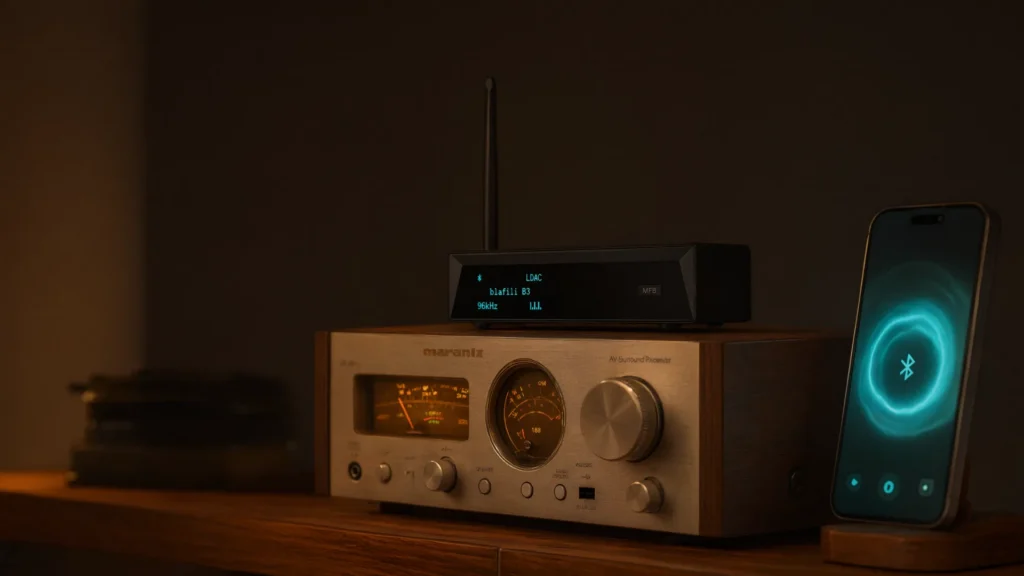
You can add Bluetooth to an old stereo in about ten minutes without touching its electronics: find a free line-level input (AUX, CD, Tape, or Line), connect a Bluetooth receiver’s output to it, power the receiver, and pair your phone. This guide walks the six steps, the input-safety chart (including the phono warning), ground-loop hum fixes, and how to keep the vintage character intact.
 Receiver guides
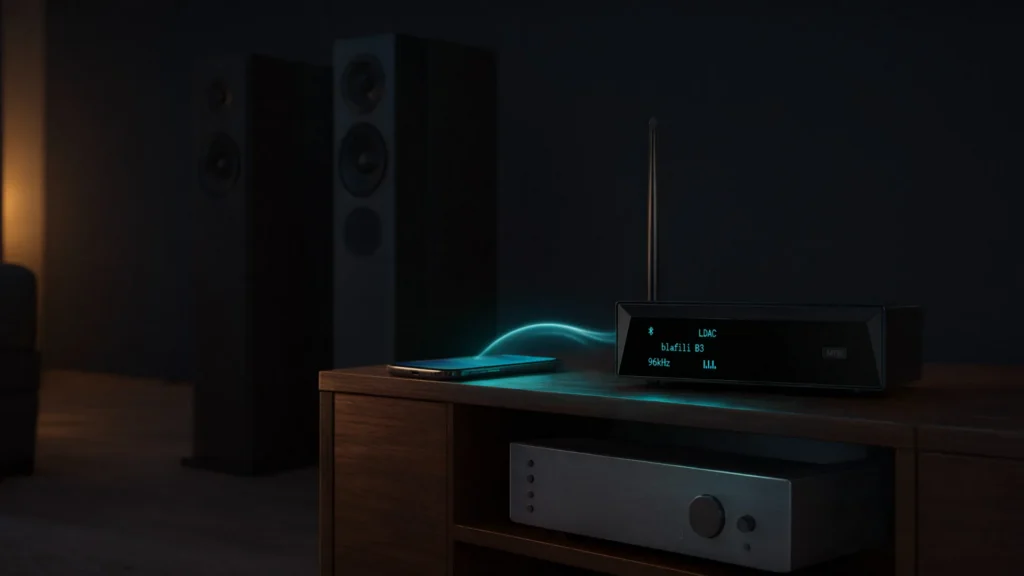
A Bluetooth audio receiver pairs with your phone and feeds the system you already own: it decodes the Bluetooth stream, rebuilds it through a DAC, and hands audio to your amp or powered speakers over RCA, 3.5 mm, 1/4″ TRS, XLR, or optical/coaxial. This guide covers the signal path, receiver vs transmitter vs amplifier, the types by output, the specs that matter, and how to choose for home, vintage, pro, and car systems.
 Uncategorized
aptX Low Latency is the codec built for one job: keeping wireless audio glued to the picture. aptX Low Latency matters wherever a screen is involved, because the default Bluetooth path can lag tens of milliseconds behind video, and the…
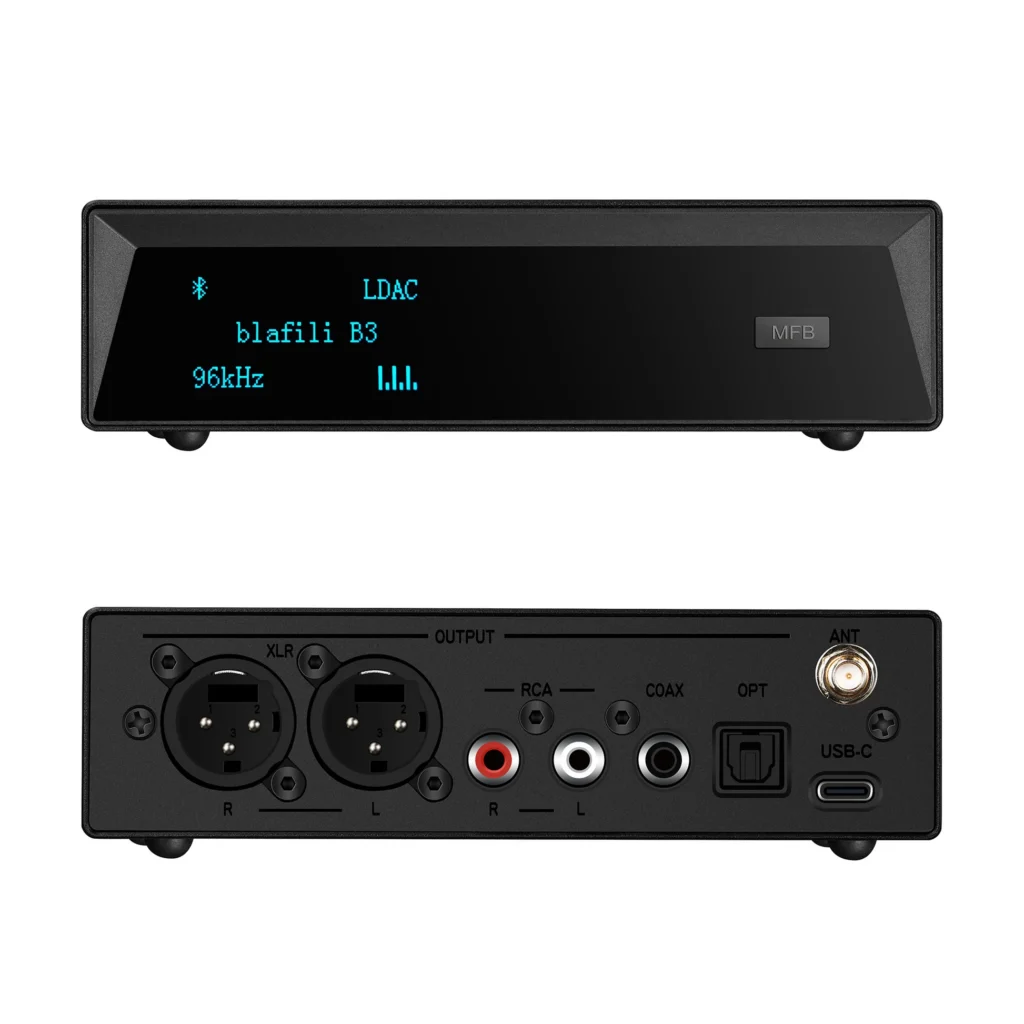 Receiver guides
Stereo vs 5.1 is a format decision before it is a speaker purchase, and for music listening the two layouts answer different questions. Stereo vs 5.1 for music comes down to how a recording was mixed, how the room is shaped, and how much…